
If you’ve ever bought a second jar of cumin because the first one was buried behind a box of crackers, you already know the real problem with most pantries: it’s rarely a lack of space, it’s a lack of system.
This guide covers a complete approach to pantry organization — the zoning logic professional organizers use, which containers are worth buying, how to handle small or deep pantries, and the habits that keep everything from unraveling again.
Key Highlights
- A cluttered pantry is almost always a systems problem, not a space problem
- Zoning by frequency of use keeps a pantry functional long-term
- Clear, uniform containers reclaim shelf space that odd packaging wastes
- A five-to-ten-minute weekly reset prevents another full overhaul
Why Is Pantry Organization Important?
An organized pantry cuts down on duplicate purchases, reduces food waste from forgotten items expiring in the back, and makes meal planning faster since you can see what you have at a glance.
What Causes a Pantry to Become Cluttered in the First Place?
Pantry clutter builds up gradually, and it usually comes down to a few repeat causes:
- No zoning system — snacks, canned goods, and baking supplies mixed together with no logic
- Bulk shopping trips that outpace the shelf space actually available
- Awkward original packaging — tall bags, crushed boxes, and pouches that don’t stack cleanly
- Older stock buried behind newer purchases, so expired items go unnoticed for months
- A one-time organizing effort with no follow-up habit to maintain it
Identifying which of these applies to your pantry actually changes the fix. If bulk buying is the issue, you need larger bins near the floor. If duplicate purchases are the pattern, the fix is visibility — clear containers instead of opaque boxes.
How Do You Organize a Pantry Step by Step?
Rather than buying containers first, work through the process in this order:
- Empty the pantry completely so you can see everything you actually own
- Sort items into categories — grains, canned goods, snacks, baking supplies, spices, breakfast items, oils and condiments
- Check expiration dates and remove anything expired or unlikely to be used
- Consolidate duplicates into a single container
- Measure your shelves — height, depth, and width — before buying storage
- Assign each category a zone based on how often it’s used
- Choose containers sized to your actual measurements
- Label everything so the system holds up once life gets busy again
- Wipe down shelves before restocking to avoid crumbs and pests
What Is the Best Zoning System for a Pantry?
Zoning is the single biggest factor separating a pantry that stays tidy from one that falls apart within weeks. The rule of thumb: put what you reach for daily at eye level, and push what you rarely use to the top or bottom shelves.
| Zone | Shelf Placement | What Goes There |
| Everyday zone | Eye level | Cereal, granola bars, breakfast staples |
| Heavy-goods zone | Bottom shelves | Rice, flour, canned goods, bottled water |
| Overflow zone | Top shelves | Backstock and appliances used occasionally |
| Small-item zone | Door racks or bins | Spice packets, sauce sachets, small jars |
| Kid-access zone | Low, reachable shelf | Snacks kids can grab independently |
Some households prefer zoning by meal purpose instead — a breakfast shelf, a baking shelf, a dinner-staples shelf — rather than strict food categories. Either approach works as long as it matches how your family actually shops and cooks.
Which Containers Work Best for Pantry Organization?
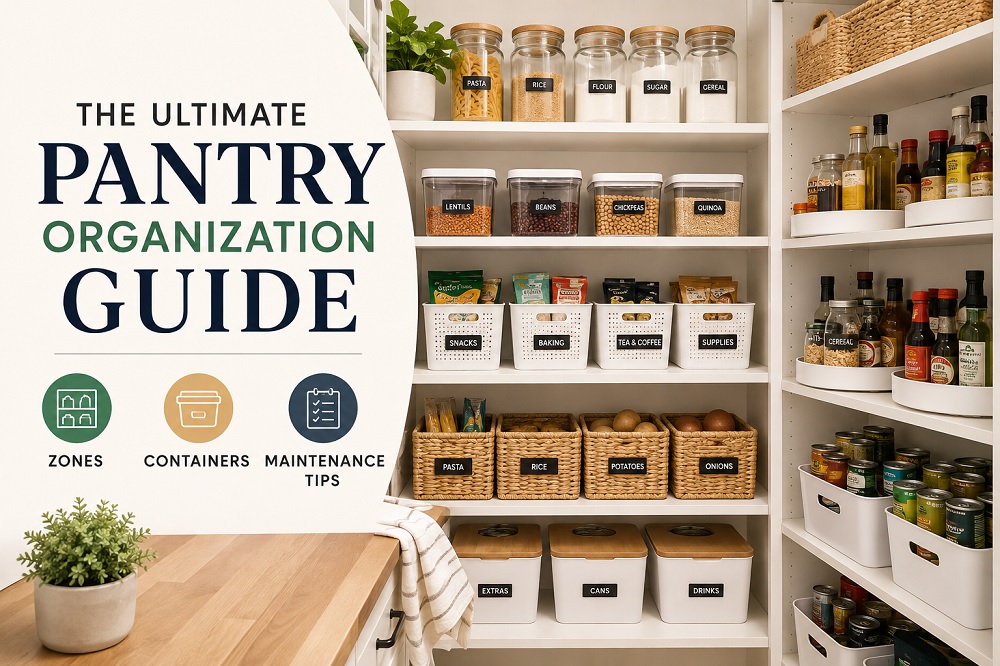
- Clear airtight canisters — best for flour, sugar, rice, and pasta; keeps food fresh and visible at a glance
- Stackable bins — best for snack pouches and granola bars; maximizes vertical shelf space
- Turntables (lazy Susans) — best for oils, sauces, and spice jars; removes the need to dig through the back row
- Open wire baskets — best for potatoes, onions, and produce; allows airflow so produce lasts longer
- Over-door racks — best for spice packets and small jars; uses otherwise wasted door space
Expert Tip
Stick to two or three container materials rather than five mismatched styles. Visual consistency alone makes a pantry feel organized.
What Are Budget-Friendly Ways to Organize a Pantry?
A full pantry refresh doesn’t require designer containers. Consider these lower-cost swaps:
- Reused glass jars from sauce, pickles, or jam
- Dollar-store bins labeled with a marker or free printable labels
- Shoeboxes wrapped in adhesive paper as makeshift canned-good holders
- Binder clips to reseal opened bags instead of buying dedicated clips
- Command hooks on the pantry door for aprons, oven mitts, or small tools
How Do You Organize a Small Pantry?
Small pantries do better with vertical strategy than horizontal spreading:
- Add a shelf above existing ones to use unclaimed vertical space
- Mount door racks for spices and small snack items
- Choose square or rectangular bins over round ones — they waste far less space
- Store lids separately instead of nesting them inside pots
- Move seasonal or bulk items to a secondary storage spot, like a basement shelf
How Do You Organize a Deep Pantry Without Losing Items in the Back?
Deep shelving is notorious for swallowing food whole. A few fixes make a real difference:
- Pull-out bins or drawer inserts so nothing hides at the very back
- Turntables for anything round — jars, cans — stored deep on a shelf
- A front-to-back labeling habit that places older stock in front (first in, first out)
- Tiered risers so back-row items stay visible from the doorway
What Mistakes Should You Avoid When Organizing a Pantry?
- Buying containers before measuring the actual shelves
- Sorting by color for looks instead of by category for function
- Skipping expiration checks during the initial sort
- Cramming shelves full with no breathing room left
- Skipping labels and assuming memory alone will hold the system together
- Ignoring how kids or other household members actually reach and use the space
What Are Some Best Practices for Keeping a Pantry Organized?
- Do a five-to-ten-minute reset every week rather than waiting for a full overhaul
- Check expiration dates monthly and merge any newly opened duplicates
- Re-evaluate your zoning every few months as shopping habits shift
- Do a quick inventory scan before big grocery runs to avoid buying what you already have
What’s the Best Maintenance Schedule for an Organized Pantry?
- Weekly — wipe up spills and return stray items to their zone
- Monthly — check dates, refresh worn labels, merge duplicates
- Every 3 months — re-evaluate zoning against current habits
- Before grocery runs — do a quick inventory check to avoid duplicate buys
Frequently Asked Questions
How often should I reorganize my pantry?
A brief weekly check paired with a deeper review every three months is usually enough to keep a pantry functional without a full redo.
What’s the best container for pantry organization?
Clear, airtight, stackable containers perform best because they preserve freshness and let you see stock levels without opening every lid.
How do I organize a pantry with no shelves at all?
Freestanding shelving units, over-door racks, and stackable bins can create tiered storage even inside a bare closet.
Is it worth buying matching containers?
Generally yes. Visual consistency makes a pantry feel organized, and uniform shapes typically use shelf space more efficiently than mismatched packaging.
What’s the single biggest mistake people make when organizing a pantry?
Buying containers before measuring shelves or sorting items — it often results in bins that don’t fit the space or match what’s actually being stored.
Final Takeaways
A well-organized pantry isn’t about perfect shelves — it’s a system that survives a busy week. Sort honestly, zone by frequency of use, invest in a few good containers, and protect it with a few minutes of upkeep weekly.