
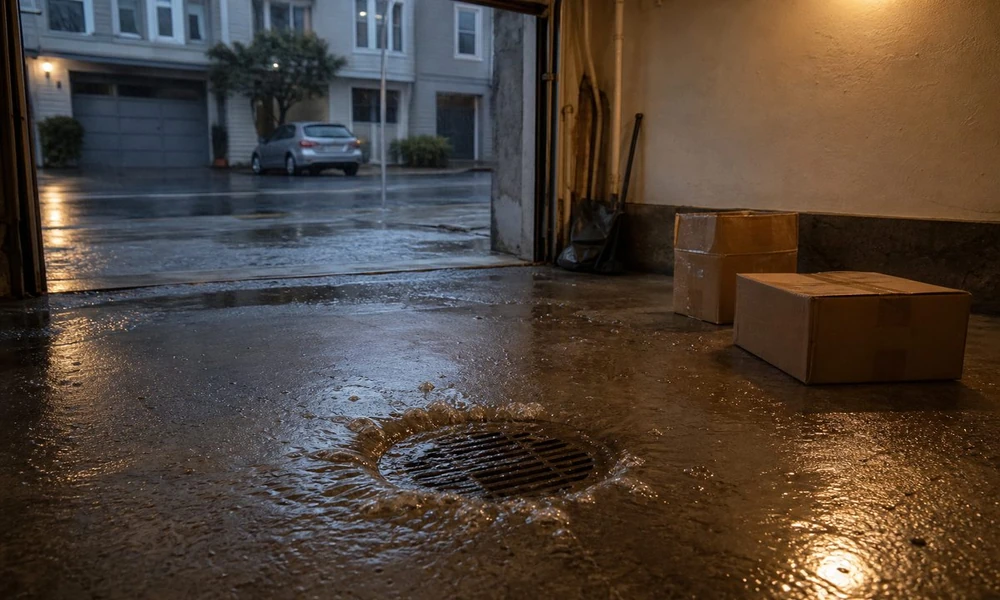
The sky is clear and the street outside is dry, but the floor drain in the laundry room is gurgling. An hour later, a thin film of gray water sits around it. By evening it’s gone, and everything works normally. Homeowners in low-lying coastal neighborhoods often describe exactly this, and many write it off as a strange one-time event.
It usually isn’t a one-time event. In a city built close to sea level, the plumbing under a house is tied to the tide whether anyone planned it that way or not. Sewer mains, storm drains and groundwater all rise and fall with the water around the peninsula. When they rise, your drains have a harder time emptying.
Anyone who has called a plumber in Charleston about a slow drain in an older home has probably heard the tide come up in the conversation. The connection is getting more relevant. NOAA’s explainer on high tide flooding says this kind of flooding is now about twice as frequent in U.S. coastal communities as it was 20 years ago, and that even minor events cause stormwater backups. The water you see in a street during a king tide also affects pipes you can’t see.
How Water Travels the Wrong Way
Household drains run on gravity. Wastewater flows downhill from each fixture into the building drain, out through the sewer lateral under the yard and into the public main. Everything depends on the main sitting lower than your lowest fixture, with room to spare.
Tidal flooding cuts into that margin from three directions.
The public sewer fills up
When stormwater and seawater get into a sewer system through manholes, cracked pipes and low inlets, the main can surcharge. That means it fills above its normal level and pushes back up the laterals connected to it. Homes with fixtures at or near grade feel it first.
Groundwater gets into the lateral
Much of the coastal Lowcountry has a shallow water table that rises with tides and heavy rain. If the sewer lateral has cracked joints or root intrusion, groundwater seeps in. The line then carries water it was never sized for, so drains slow down even when nobody is using much water inside.
The outlet sits underwater
Yard drains, gutter downspouts and some storm connections empty into outlets that can be submerged at high tide. Water that can’t leave the property backs up toward the house and finds any low opening it can.
Older Pipes Make the Problem Worse
Historic homes and mid-century neighborhoods have more than charm underground. Their drain lines are often made of materials that wear out faster in wet, salty soil.
Cast iron was the standard for decades. It lasts a long time, but it corrodes from the inside and wears thin along the bottom of horizontal runs where water sits. Scale builds up and narrows the pipe, and channel rot eventually opens the bottom of the pipe to the soil below.
Clay tile laterals hold up well against corrosion, but they’re laid in short sections with many joints. Every joint is a potential entry point for roots and groundwater, and shifting sandy soil can pull sections out of line.
Orangeburg pipe, a compressed wood fiber and tar product installed in some homes from the 1940s into the 1970s, softens and deforms over time. In a high water table, it can collapse into an oval shape that barely passes water.
None of these failures tends to announce itself. The usual first signs are recurring slow drains, a sewer smell in the yard, or a toilet that bubbles when the washing machine drains.
What to Do When Drains Gurgle at High Tide
If your drains seem to act up around the tide schedule, a few steps can narrow down the cause before anything gets torn up.
- Track the timing. Check a local tide table and note whether the symptoms match high tides, heavy rain, or both. A clear pattern points toward the public system or groundwater, not a clog inside the house.
- Cut back on water use during peaks. Running the dishwasher or washer while the sewer is surcharged pushes more water into a line that can’t drain. Waiting a few hours can prevent a small backup.
- Find your cleanout. Most homes have a capped cleanout where the building drain leaves the house. Knowing where it is speeds up any service call.
- Ask for a camera inspection. A sewer camera shows cracks, root masses, sags that hold water and pipe material, so repairs can target the actual problem.
- Check your insurance. Standard homeowner policies often exclude sewer backup unless you add a rider, and flood coverage is a separate policy.
The Backwater Valve Question
For homes where backups keep happening, a backwater valve is often the most direct fix. It’s a one-way device installed on the building drain or sewer lateral. A flap lets wastewater leave but closes when water tries to flow back from the street. Many plumbing codes require one when fixtures sit below the rim of the nearest upstream manhole, a situation that is common in low-lying areas.
The name causes confusion. A backwater valve protects the drain side of the house. A backflow preventer protects the water supply side, keeping contaminated water out of the drinking lines. They’re different devices for different problems, and a coastal home may need both.
A backwater valve also needs maintenance. Sand, grease and debris can keep the flap from sealing, so the access cover should be opened and the valve checked at least once a year. While the valve is closed, water used inside the house has nowhere to go. That is one more reason to go easy on water use during a king tide or a heavy storm.
Repairs That Fit Wet Ground
When a lateral needs work, the options have expanded in recent years. Hydro jetting can clear roots, grease and scale from a line that is structurally sound. For pipes that are cracked but still mostly round, cured-in-place lining can create a new pipe inside the old one with little digging. Collapsed sections, bellies that hold standing water and Orangeburg lines usually need excavation and replacement with PVC.
Wet soil affects any of these jobs. Trenches can fill with groundwater, and work is easier at low tide during a dry stretch. A contractor who knows the area will usually plan around the tide table, not just the calendar.
Coastal living means water is always nearby, and plumbing can’t be treated as something separate from the tide. A drain that only misbehaves during the highest tides each month is giving you an early warning. If you figure out why while the problem is still small, it’s much less likely to show up later as sewage on the laundry room floor.