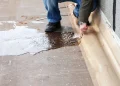

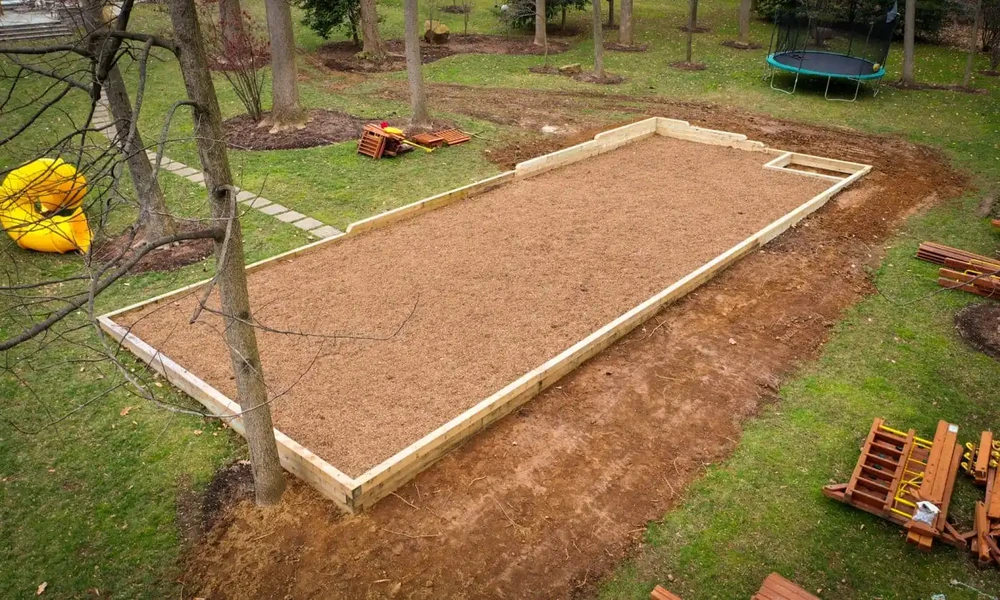
A two degree tilt sounds like nothing. Put a golf mat on that same patch, hand someone a driver, and those two degrees start to matter in ways most hosts never see coming. The ball sits a touch above or below the feet, the swing adjusts without the golfer realizing it, and the sensor reading the shot begins from a slightly crooked starting point.
That is why people who haul portable simulators around for a living talk about ground long before they talk about screens or course lists. The family owned and woman owned crew behind on-the-go-golf.com sets up bays for weddings, bachelor parties, birthdays and team outings from Denver down to Castle Rock, and their planning conversations tend to circle back to one point. Whether the party lands on a patio, a lawn or a venue courtyard, the spot under the mat must be flat in Aurora or anywhere else before a single club comes out of the bag.
The Hidden Trouble a Slope Creates
A tilted setup causes problems in three places at once, and none of them announce themselves.
The first is the golfer. When the ground leans, the ball ends up above or below the feet, or on a gentle uphill or downhill lie. Real golfers know these lies change ball flight. A ball above the feet tends to curve left for a right handed player, a ball below the feet tends to drift right, and uphill lies send shots higher. The trouble is that the screen still shows a perfectly flat fairway lie, so the guest sees a strange result and assumes the swing was off.
The second is the sensor. Camera based launch monitors that sit beside the ball measure launch angle and side angle relative to their own position, which is why many of them include a small built in level. If the unit sits crooked, every number it reports inherits that error. A single degree of side angle sounds harmless, yet over a 250 yard drive it moves the ball roughly four to five yards offline. Three degrees pushes that past a dozen yards, enough to turn a good drive into a rough lie on screen. Radar units placed behind the hitter have the same need for a square, steady base aimed down the target line.
The third is the structure itself. Frames and inflatable enclosures want even footing, the projector needs a stable aim at the screen, and a mat that rocks slightly underfoot becomes a tripping hazard after a few swings.
Why Local Ground Rarely Behaves
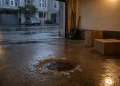
The Front Range has a reputation among builders, and it comes from the soil. Much of the metro sits on clay that swells when wet and shrinks when dry. According to Colorado’s hazard planning guidance, about half of the state’s soil carries a high or very high potential for this shrinking and swelling. Homeowners see the results every spring as patios crack, sidewalk panels lift, and driveways settle unevenly. Concrete that looks level from the kitchen window is often a few degrees off once a straightedge touches it.
Newer subdivisions add their own wrinkle. Yards are graded on purpose so water runs away from foundations, which means the ground closest to the house almost always tilts outward. Then come the smaller surprises. Xeriscape rock beds shift underfoot, artificial turf can feel springy under a mat, and a lawn watered the night before goes soft enough for the hitting surface to sink at the front edge. Sprinkler heads hide in grass exactly where a mat wants to sit.
Sizing Up the Usual Spots
Every property offers a few candidates, and each has its own personality.
The concrete patio. Usually the firmest option, and often the best one. Check it anyway, since heaved slabs and settled corners are common, and look for expansion joints that might sit under the stance.
The driveway. Wide and solid, but most driveways slope toward the street for drainage and many have a slight crown. Turning the bay so the slope runs along the target line rather than across it usually helps, though a steep pitch still needs correcting.
The lawn. Soft, forgiving and roomy, with plenty of space for spectators. It also hides dips and soft spots, so a quick walk with a level matters most here. Skipping the evening watering before the event keeps the ground firm.
The garage. Often the flattest surface around, although floors are usually poured with a gentle fall toward the door. Ceiling height becomes the bigger question, since a full driver swing needs roughly ten feet of clearance.
The venue space. Brewery patios, event lawns and parking areas vary widely. Asking the venue for photos or a quick site visit avoids surprises on the day.
A Fifteen Minute Check Before Booking
Hosts can learn most of what a rental team needs with a few simple tools and a short walk.
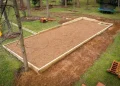
- Mark out a rough footprint of about ten by fifteen feet, plus extra room behind and beside the hitter for onlookers.
- Lay a long level or a straight board across the area in both directions, along the target line and across it, and note which way it leans.
- Scan for sprinkler heads, drains, cracks, raised joints and rock edging inside the footprint.
- Measure the distance to the nearest outdoor outlet so cord length is not a guess.
- Take a few photos from different angles and share them with the operator ahead of time.
Small slopes are rarely a deal breaker. Experienced crews carry leveling pads, shims or platform sections, and they know how to rotate a bay to work with the ground instead of against it. What causes trouble is the slope nobody mentioned until setup began.
Thin Air and a Big Sky Above the Mat
Flat ground solves the problem underfoot, but the Aurora setting brings two more things worth knowing. The first is altitude. Sitting roughly a mile up, the thinner air lets real golf balls carry noticeably farther than at sea level, and most simulator software includes an elevation setting. Guests can play at local altitude for bragging rights or switch to sea level for a truer read on their distances.
The second is weather. Colorado sunshine is intense enough to wash out a projected image in mid afternoon, so shade or an evening start improves the picture. Summer storms build quickly over the plains, and gusty afternoons can stress an inflatable enclosure, which makes a covered backup spot worth planning for.
The Least Glamorous Part Pays Off
Nobody remembers the ground at a good party. They remember the uncle who won the long drive contest, the coworker who finally hit a green, and the laughter around the screen. All of that rests on a surface that stays level, steady and safe through hundreds of swings. A few minutes with a level and some honest photos give the evening its best chance, and they let every guest blame their own swing rather than the patio.