
A hairline crack across the tile in a Lutz living room rarely shows up alone. A few weeks later the back door starts to stick, a soft spot appears near the patio, and somebody in the house says the word every Tampa Bay homeowner dreads. Still, plenty of homes showing these exact warning signs turn out to have a far more ordinary problem buried beneath them, a pipe that has been leaking out of sight for months.
Sorting one from the other early saves money and worry, ideally before anyone pays for engineering reports or files a claim. A licensed crew such as Black Ops Plumbing & Service, working out of Lutz and covering neighborhoods from Wesley Chapel down toward Brandon, can test the drain and water lines under a slab and tell you whether water belongs in the story at all. That single answer shapes every decision that follows.
The Ground Under Pasco and Hillsborough Has a Long Memory
Florida rests on thousands of feet of limestone, and slightly acidic groundwater has been dissolving that rock for a very long time, leaving cavities of every size. The band running from northern Hillsborough through Pasco and into Hernando earned the nickname sinkhole alley for good reason. Most local sinkholes are the cover subsidence type, where sand slowly sifts down into openings in the rock and the surface sags into a shallow bowl rather than vanishing overnight.
The Florida Geological Survey’s sinkhole FAQ points out that since the entire state sits on carbonate rock, a sinkhole could in theory form anywhere. It also reminds residents that factors other than sinkholes can cause land to settle.
The region has seen what happens when water moves suddenly. During the January 2010 freeze, farmers around Plant City and Dover pumped enormous volumes of groundwater to protect strawberry crops, and dozens of holes opened nearby. Record rain from Tropical Storm Debby in 2012, falling after a long drought, set off another wave across Pasco. In both cases, water shifted and the ground followed.
When Water Does the Digging
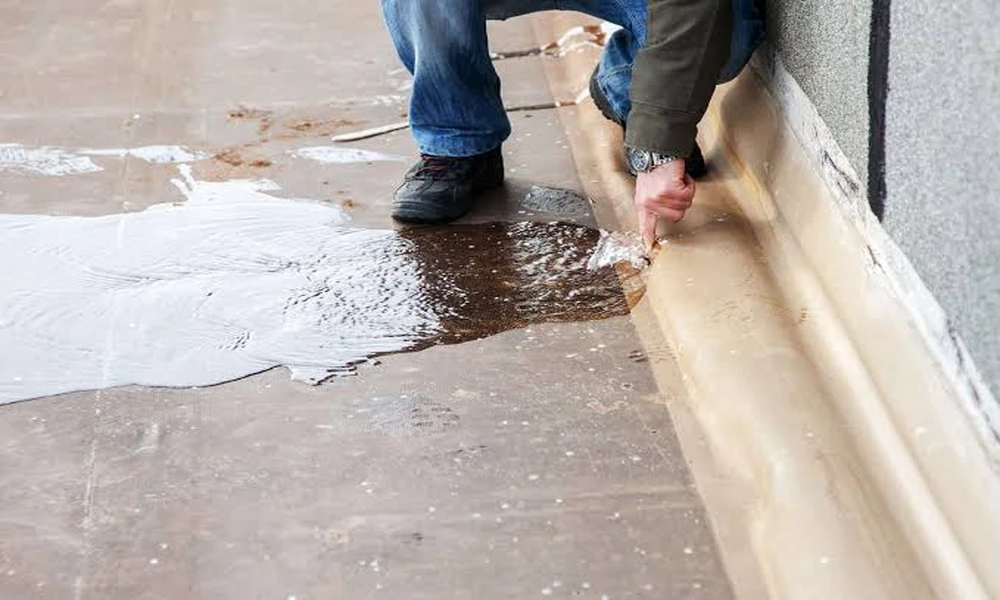
That same logic explains why a household leak can imitate ground failure and sometimes even start it. Soil around Lutz is mostly fine sand. A cracked cast iron drain under a 1970s or 1980s slab, a separated joint in a PVC sewer lateral, or a pinhole in a copper supply line beneath the foundation keeps feeding water into that sand day after day. The flow carries fine grains away, toward a low point, into the broken pipe itself, or down into gaps in the rock. Slowly a pocket forms under the concrete. Once the slab loses support, it cracks and settles in a pattern that looks a lot like a natural sinkhole.
Drain leaks tend to cause more of this damage than supply leaks. A pressurized water line that fails usually gives itself away through a spinning meter or a sudden jump in the bill. A broken drain only leaks when someone showers, runs laundry, or starts the dishwasher, so it can wash soil away for years with no obvious clue. Oak roots on older Lutz lots often widen those cracks.
Same Symptom, Two Different Stories
Because the warning signs overlap so heavily, guessing from the surface rarely works. Some clues lean toward plumbing, though.
Damage clustered around wet rooms. Cracks and settling concentrated near bathrooms, the kitchen, or along the route the main drain takes toward the street suggest water coming from inside the house rather than rock far below.
Warm tile or damp grout. A hot water line leaking under the slab can warm a patch of floor you notice barefoot. Grout that never dries, or a musty smell at the baseboards with no roof leak in sight, points the same way.
Drains that gurgle or back up. A sagging or broken sewer lateral often announces itself with slow drains and sewer odor long before a crack appears.
A dip right over the sewer line. A yard depression between the cleanout and the street deserves a camera before a geologist.
Other signs lean toward true ground movement. A round depression away from any pipe route, stair step cracks running through exterior block walls, neighbors reporting similar trouble, or a nearby pond losing water quickly all deserve attention from an engineer. Sometimes both exist together, since a sinkhole can snap a pipe and a leak can enlarge a forming void.
How the Pipes Get Ruled In or Out
A careful evaluation moves from the cheapest, least invasive checks toward the more involved ones.
- The supply side comes first. With every fixture off, the leak indicator on the water meter should sit still. If it moves, valves get closed one at a time to isolate the leaking branch.
- Next comes a pressure test, where a gauge on the supply lines shows whether pressure holds steady over a set period.
- A camera then travels through the drain system from the cleanout, revealing breaks, offset joints, bellies, and roots, while a locator marks the exact spot on the floor above.
- For drains under the slab, a hydrostatic test plugs the line and fills it with water. If the level drops, the system is leaking somewhere below the house.
- Acoustic and thermal tools narrow down any confirmed leak so repairs disturb as little flooring as possible.
Repairs might then mean opening the slab at one spot, tunneling beneath it, rerouting supply lines through the attic, or lining an old drain.
The Insurance Detail Hiding Behind the Crack
Florida Statute 627.706 requires standard homeowners policies to cover catastrophic ground cover collapse, which applies only when the ground gives way abruptly, a depression is clearly visible, and the home is condemned. Coverage for the slower, more common kind of sinkhole damage is optional and usually costs extra, so many Tampa Bay homes simply do not have it.
Insurers investigating a ground claim often bring in engineers who use ground penetrating radar and soil borings, and they frequently want to know whether plumbing leaks were ruled out first. Many policies also limit coverage for water that seeped over a long stretch of time. Written test results from a plumber give you documentation either way, and your agent can explain how your own policy reads.
Fixing the Ground Does Not Finish the Job
When a sinkhole is confirmed, repair crews typically pump thick compaction grout deep into the ground to fill voids, inject chemical grout closer to the surface, or install steel piers beneath the foundation. That work happens right where the drain lines run. Grout under pressure can push into a cracked pipe, shift a joint, or fill a section of drain entirely, so a line that passed testing beforehand can come out of the process damaged.
That is why a second round of plumbing tests after stabilization matters as much as the first. A crack in the floor tells you something moved, nothing more. Finding out whether water caused it, followed it, or had nothing to do with it is what turns a frightening guess into a repair plan you can actually trust.