
A leaking cartridge or a stray drop while refilling a tray can turn a favorite shirt into a stained mess in seconds. Printer ink is formulated to bond quickly and permanently to paper, which means it can grip fabric fibers just as stubbornly if it isn’t treated right away.
Most printer ink stains, whether from an inkjet cartridge or laser toner, can be treated at home with items already in a bathroom cabinet or laundry room. Below are two step-by-step methods, one for a fresh stain and one for ink that’s already dried in.
Why Is Printer Ink So Hard to Remove?
Printer ink is engineered to resist fading once it dries on paper, and that same durability works against you once it lands on fabric, especially absorbent materials like cotton. Laser toner is different — it’s a powder fused with heat, so if it’s caught before it’s heat-set, it can often be brushed off before it ever becomes a true stain.
How Do You Treat a Fresh Ink Stain?
- Remove the garment if possible, so the ink doesn’t transfer to skin or other fabric layers.
- Place a clean towel underneath the stain and blot gently with a dry cloth, working from the outer edge toward the center. Never rub, since rubbing pushes ink deeper into the fibers.
- Dampen a cotton ball with rubbing alcohol and dab repeatedly, switching to a clean section as it picks up ink.
- Alternatively, apply a small amount of dish soap directly to the stain, work it in with a soft toothbrush, and let it sit for five minutes.
- Rinse with cool water — never hot, since heat can help set the pigment — and check the stain before laundering as usual.
How Do You Treat a Dried, Set-In Stain?
- Soak the stained area in a mixture of one part white vinegar to one part cool water for at least 30 minutes, or overnight for stubborn spots.
- If the stain remains, apply liquid laundry detergent directly to it and work it into the fibers with a soft-bristled toothbrush for several minutes.
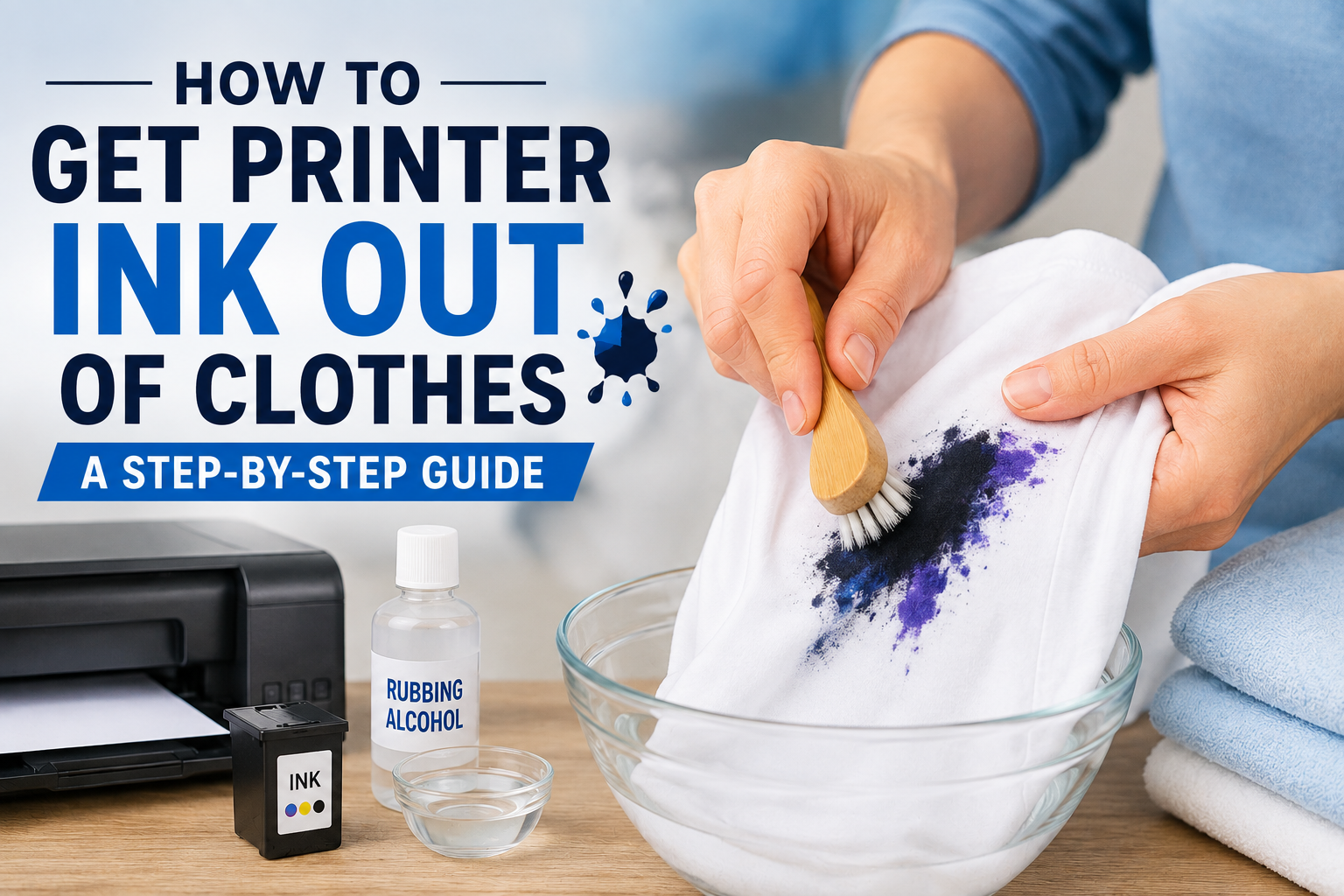
- For a stronger approach, lay the fabric ink-side down over a bowl and drip rubbing alcohol through the back of the stain, pushing the pigment out and away from the fibers.
- For white, bleach-safe garments, follow up with an oxygen-based fabric bleach according to the product’s instructions.
- Air dry and inspect the fabric closely before using a dryer — do not apply heat until the stain is completely gone.
Does the Fabric Type Change the Approach?
Sturdy, colorfast fabrics like cotton and polyester blends generally tolerate rubbing alcohol, vinegar, and dish soap well. Delicate materials like wool and silk need a gentler touch: start with cool water, and test any stronger product on a hidden seam first, since alcohol and vinegar can affect certain dyes.
Always check the garment’s care label before treating a stain. For anything marked dry-clean only, it’s safer to bring it to a professional and point out the stain rather than risk further damage at home.
How Can You Prevent Ink Stains in the First Place?
- Change cartridges over a covered surface, such as a towel, rather than directly over clothing.
- Keep disposable gloves near the printer if cartridges in your household tend to leak during changes.
- Store spare cartridges upright in their original packaging to reduce leak risk before installation.
- Keep rubbing alcohol wipes on hand in a home office or printing area for quick treatment.
- Wear an apron or old shirt when refilling ink tanks on refillable printer models, since these are more prone to drips than sealed cartridges.
What Common Mistakes Make Ink Stains Worse?
A few instinctive reactions actually make ink stains harder to remove. Scrubbing hard at a fresh stain feels productive, but it drives the pigment deeper into the weave and can spread it well beyond the original mark. It’s almost always better to blot patiently than to rub aggressively, even though blotting takes more time and looks less dramatic.
Reaching for hot water is another common misstep. Warm or hot water can help pigment bond more tightly to fibers, which is the opposite of what you want before a stain has been treated. Stick to cool water throughout the pretreatment stage, and only move to warmer water once a garment’s care label specifically calls for it during the wash cycle.
Tossing a stained item in the dryer before confirming the stain is gone is probably the most common mistake of all. Heat sets ink permanently, turning what might have been a fully treatable stain into one that’s now bonded into the fabric for good. Always let the item air dry and inspect it in good light before running it through a dryer cycle.
Quick Reference Table
| Stain Type | Best First Method | Water Temp |
|---|---|---|
| Fresh liquid ink | Blot, then rubbing alcohol | Cool |
| Dried liquid ink | Vinegar soak (30+ min) | Cool to lukewarm |
| Toner powder (unset) | Brush or vacuum off dry | Cool |
| Delicate fabrics | Cool water blot, test first | Cool |
Frequently Asked Questions
Will hairspray still remove ink stains?
Older formulas with more alcohol used to help, but many modern hairsprays contain far less, so rubbing alcohol applied directly is a more dependable choice today. If you want to try hairspray anyway, spray it directly onto the stain, let it sit briefly, and blot rather than rub.
Is it safe to put a stained item in the dryer?
No. Heat can permanently set any remaining pigment into the fabric, so air dry and confirm the stain is gone before using heat. If any trace of the stain is still visible under good lighting, repeat the treatment before drying.
Does printer ink stain skin the same way it stains fabric?
No. Skin naturally exfoliates, so ink marks on skin usually fade within a day or two with normal washing, unlike fabric where pigment can bond more permanently into the woven fibers.
What if the stain won’t come out after multiple attempts?
After two or three tries, consider a professional dry cleaner and mention that the stain is printer ink, since they have access to solvents not typically available at home.
Can toner stains from a laser printer be treated the same way?
Toner is a dry powder before it’s heat-set, so try brushing or vacuuming it off first. If it’s already been through a heat source, or looks smudged in, treat it the same way you would a dried liquid ink stain.