
|
Quick Answer ● A double wide manufactured home is built in two factory sections and joined on-site into one home, typically 1,000–2,400 sq ft, costing $90,000–$220,000 for the structure alone. ● On owned land with a permanent foundation, double wides have appreciated at roughly 5% a year since 2000 — nearly matching site-built homes (FHFA data). ● On rented lots or personal-property titles, they typically depreciate 3–5% a year, closer to a vehicle. ● A 2026 congressional vote to roll back DOE energy standards could add up to $475/year in utility costs to new double wides if it takes effect. |
What a Double Wide Actually Is
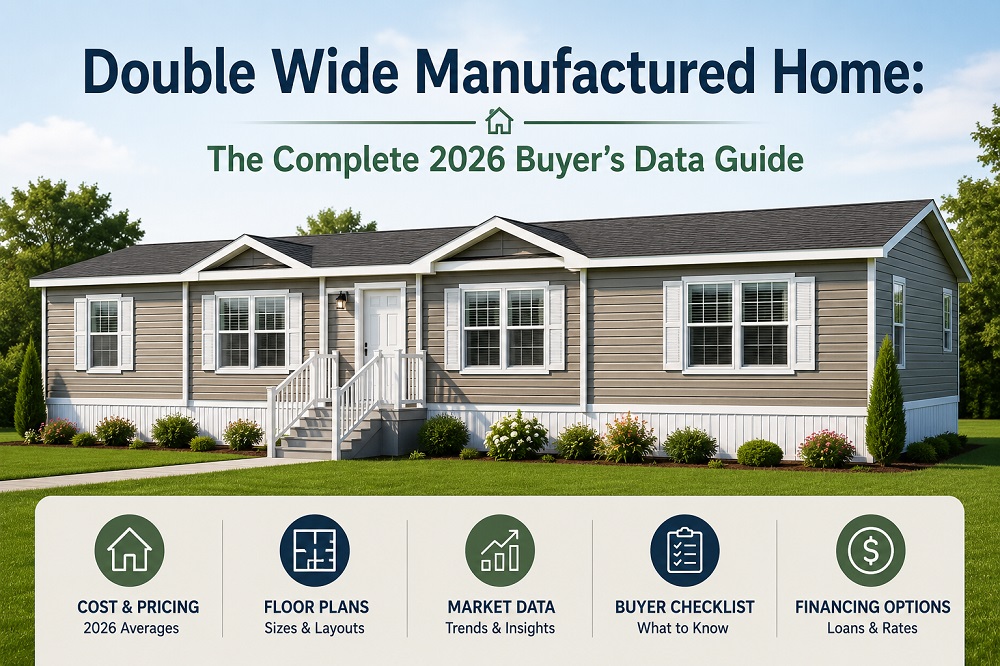
A double wide is two HUD Code sections, each roughly the footprint of a single wide, built in a climate-controlled factory and joined on-site into one continuous structure. HUD Code (not local building code) governs construction nationwide, which is why a home built in Indiana meets the same baseline standard as one built in Oregon. This is the size tier most families choose for a permanent, full-time residence — single wides are cheaper but cramped; triple wides rival site-built pricing.
Sizing at a Glance
| Type | Width | Sq Ft | Typical Price* |
| Single wide | 14–18 ft | 600–1,300 | $50,000–$100,000 |
| Double wide | 28–32 ft | 1,000–2,400 | $90,000–$220,000 |
| Triple wide | 40+ ft | 2,000–3,500+ | $150,000–$250,000+ |
*Structure only — excludes land, delivery, foundation, and utility hookups.
Floor Plans That Actually Outperform
- Split-bedroom: primary suite on one end, secondary bedrooms on the other — the resale winner, since it mimics site-built privacy zoning.
- Great room: kitchen, dining, and living space merged into one open zone — best for making 1,200 sq ft feel larger.
- Front-kitchen: kitchen near the entry instead of centered — shortens the grocery-to-counter path, popular in rural/farm layouts.
- Dual-primary: two full suites on opposite ends — built for multigenerational households or co-owners, and increasingly requested since 2024.
- Offset/L-shaped: breaks up the “shotgun hallway” feel common in older double wide designs.
What Double Wides Really Cost in 2026
| Size | Base Price Range |
| 1,000–1,200 sq ft | $80,000–$110,000 |
| 1,200–1,500 sq ft | $100,000–$140,000 |
| 1,500–1,800 sq ft | $130,000–$170,000 |
| 1,800–2,200+ sq ft | $160,000–$220,000+ |
- Delivery: $5,000–$13,000, driven by distance, escort-vehicle requirements, and road access.
- Site prep: $4,000–$11,000 for clearing, grading, and leveling.
- Foundation: permanent perimeter or pier-and-beam foundations add separate cost but are required for real-property financing.
- All-in rule of thumb: budget $25,000–$50,000 above the sticker price before you have keys.
Financing: The Part Most Articles Skip
How your home is titled decides which loans you can even get — this single detail matters more than credit score for most manufactured home buyers.
| Loan Type | Typical Rate* | Requires Owned Land + Permanent Foundation? |
| Chattel (personal property) | 9%–12% | No |
| FHA Title I/II | ~7.5% | Title II: yes |
| Freddie Mac / MH Advantage | ~6.3%–7.0% | Yes |
| Conventional mortgage | Market rate | Yes |
*Representative rates; shop multiple lenders, as terms shift with the rate environment.
About 76% of new manufactured homes are still titled as personal property (chattel), even though converting to real property, when land is owned, unlocks cheaper, longer-term financing. On a $75,000 balance, a 9% chattel loan over 20 years runs roughly $87,000 in interest, versus about $95,600 on a 6.5%, 30-year conventional mortgage for the same amount — the chattel loan actually costs less in total interest but demands a much higher monthly payment over a shorter term.
Does a Double Wide Appreciate or Lose Value?
This is the most misunderstood part of manufactured housing, and the data is clear: land status is the deciding factor, not the home itself.
- Real property (owned land, permanent foundation, deeded): FHFA data shows manufactured homes appreciated 211.8% from 2000–2024, versus 212.6% for site-built homes — both averaging close to 5% annually.
- Personal property (leased lot, chassis intact, vehicle title): typical depreciation runs 3%–5% a year, similar to a car.
- Worked example: a $120,000 double wide on a leased lot loses roughly $40,400 in value (33.7%) over 10 years at 4% annual depreciation; the same home converted to real property on owned land tracks local market appreciation instead.
The 2026 Policy Shift Buyers Should Know About
In January 2026, the U.S. House passed a bipartisan bill to roll back 2022 DOE energy efficiency standards for new manufactured homes, including double wides. The original rule was projected to save double wide owners about $475 a year on utility bills; rolling it back would let manufacturers use thinner insulation and cheaper sealing again, lowering the sticker price but raising long-term operating costs. If you’re shopping in 2026, ask directly whether a floor plan already meets the 2022 IECC-based insulation and duct-sealing standard — some manufacturers build above code regardless of the legal minimum, and that’s a durable indicator of long-term quality.
Common Mistakes Buyers Make
- Comparing base sticker prices without asking whether delivery, foundation, and hookups are included.
- Buying on leased land, then being surprised the home doesn’t appreciate like a house.
- Defaulting to a chattel loan without checking whether converting to real property would qualify them for MH Advantage or a conventional mortgage instead.
- Picking a floor plan by square footage alone instead of walking a model with the actual bedroom and window layout.
- Not asking whether the insulation package exceeds the current HUD/DOE minimum — a detail that affects utility bills for decades.
Expert Take
Manufactured housing analysts increasingly frame the buying decision around one question: real property or personal property? Everything else — financing rate, appreciation, resale pool, insurance options — flows from that single classification choice. Consultants also note that floor plan quality, not total square footage, is now the biggest differentiator between double wide brands, since most manufacturers have converged on similar base pricing.
FAQ
What’s the real difference between a single wide and a double wide?
A single wide is one factory section, 14–18 feet wide; a double wide is two sections joined on-site, 28–32 feet wide, with roughly double the livable space and better resale demand.
Do double wide manufactured homes appreciate?
Yes, when placed on owned land with a permanent foundation and titled as real property — FHFA data shows about 5% annual appreciation, close to site-built homes. On leased land as personal property, they typically depreciate 3%–5% a year instead.
Is a chattel loan or a mortgage better for a double wide?
A mortgage is cheaper long-term but requires owned land and a permanent foundation. A chattel loan is faster and works on leased land, but carries a higher rate and a shorter term.
How much extra should I budget beyond the home’s price tag?
Plan for $25,000–$50,000 above the base price to cover delivery, site prep, foundation, and utility hookups.
Will double wides get less energy-efficient in 2026?
Possibly. A 2026 bill to roll back 2022 DOE efficiency standards could let manufacturers use thinner insulation, which would lower the purchase price but raise utility bills by up to $475 a year for the life of the home.